How to Hydrate Your Skin
Dull skin, fine lines that weren't there last month, a tight feeling after cleansing – these are all signs your skin is dehydrated.
Fortunately, though, while this might seem like a complicated problem to solve, it usually isn't. And, with the right approach to skin hydration and a routine built around your skin type, you can see a real difference in how soft, smooth, and comfortable your skin feels.
In this guide, we’re breaking down everything you need to know about how to hydrate your skin. We’ll cover the best ingredients to look for, which hydrating skincare routine is best for your skin type, and which Garnier products to use to build the right hydrating regime for you.
What is a non-greasy moisturiser?
A non-greasy moisturiser is a lightweight, oil-free formula with a gel or sorbet texture that has a water-like consistency when it makes contact with the skin.
Dry skin types are lacking in natural lipids, which is why emollient- and occlusive-rich moisturisers are generally best to supplement moisture loss. But for other skin types, a lack of water in the skin can still present other challenges – even causing the skin to produce more oil to overcompensation for dehydration.
Unlike other moisturisers, non-greasy moisturisers feel weightless on the skin and rely more on lightweight, hydrating ingredients such as hyaluronic acid and niacinamide to give your skin moisture barrier the support it needs.
What are the benefits of a non-greasy moisturiser?
Thanks to their fast-absorbing texture and lasting hydration, non-greasy moisturisers offer plenty of benefits for the skin.
These lightweight, non-comedogenic (non-pore-clogging) formulas are well-suited to oily and combination skin or if you’re prone to blemishes.
They provide essential hydration without leaving a heavy residue on the skin – so they feel comfortable even in humid climates.
Non-greasy moisturisers deliver a matte, shine-free finish.
They’re designed to hydrate all types of dehydrated skin – which is a common concern that can affect any skin type at one point or another.
A light texture and quick absorption make non-greasy moisturisers perfect for wear under sunscreen and makeup, so your products don’t pill.
Which non-greasy moisturiser is right for me?
Non-greasy moisturisers work on all types of dehydrated skin. But to get the most out of your formula, start by tailoring to the skin concern you want to target.
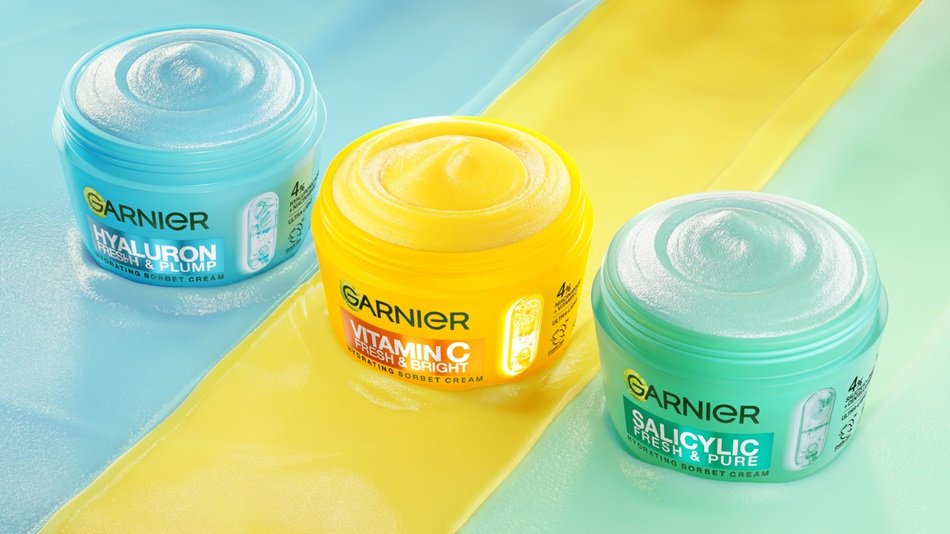
Garnier’s Sorbet Cream range includes three types of non-greasy moisturisers. Each is formulated to address one of a trio of key concerns: dehydration, dullness, and blemishes.
What’s more, each formula is enriched with a specific set of active ingredients to help you achieve your skin goals while keeping oil levels balanced.
Find your perfect non-greasy moisturiser match below.
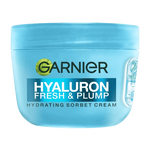
For plumping and hydrating: Garnier Hyaluron Fresh & Plump Hydrating Sorbet Cream
Dehydrated skin can look flat, tight, flaky, and fatigued, often losing its natural plumpness and elasticity. If you’re experiencing skin dehydration, it’s important to replenish your skin’s water content with moisture-locking ingredients. You can turn to humectants to hydrate your skin since they have a lightweight texture that sits comfortably on the complexion while binding high amounts of water to the epidermis.
For parched skin that’s lost its plumpness, we recommend the Garnier Hyaluron Fresh & Plump Hydrating Sorbet Cream. This non-greasy moisturiser is infused with one of the most powerful humectants – hyaluronic acid – to draw water into the skin. This ingredient is supported by niacinamide, which helps nourish the skin and improve overall skin clarity.
Enjoy lasting hydration and a plumper, smoother complexion – without the oily feel.
For brightening and evening skin tone: Garnier Vitamin C* Fresh & Bright Hydrating Sorbet Cream
Your skin is susceptible to changes in tone and brightness, which is typically the result of dehydration and free radicals causes by external aggressors – namely, UV damage. In this instance, we suggest a non-greasy moisturiser that’s enriched with antioxidants to protect against environmental aggressors and improve skin tone.
Powered by 4% vitamin C* and niacinamide, Garnier Vitamin C* Fresh & Bright Hydrating Sorbet Cream delivers an antioxidant blend to the skin to help protect against external aggressors, brighten the complexion, smooth irregular texture, and visibly even out skin tone. This formula also provides all-day oil control to keep your skin fresh and balanced.
*Vitamin Cg = Vitamin C derivative
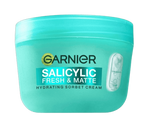
For blemish control: Garnier Pure Active Salicylic Fresh & Matte Hydrating Sorbet Cream
Oily and blemish-prone skin types will know the challenge of finding a non-greasy moisturiser that doesn’t exacerbate existing breakouts. So, in addition to finding a lightweight, oil-free formula, you can look out for blemish-fighting, sebum-regulating ingredients that help get rid of blemishes – without skimping on essential hydration.
For a shine-free finish and comfortable feel, consider adding the Garnier Pure Active Salicylic Fresh & Matte Hydrating Sorbet Cream to your skincare routine. Ideal for dull, uneven, blemish-prone skin, the formula is enriched with a blend of salicylic acid, niacinamide, and Centella Asiatica.
Salicylic acid exfoliates and unclogs pores, niacinamide improves skin tone and texture, and Centella Asiatica supports the skin moisture barrier function. This trio of ingredients works to leave your skin feeling visibly smoother, clearer, and comfortably hydrated.
A non-greasy moisturiser demands a skincare partner-in-crime, so choose the right cleanser for your skin type next.